
17 in stock
Revenge of the Tipping Point
Non-Fiction
1 in stock
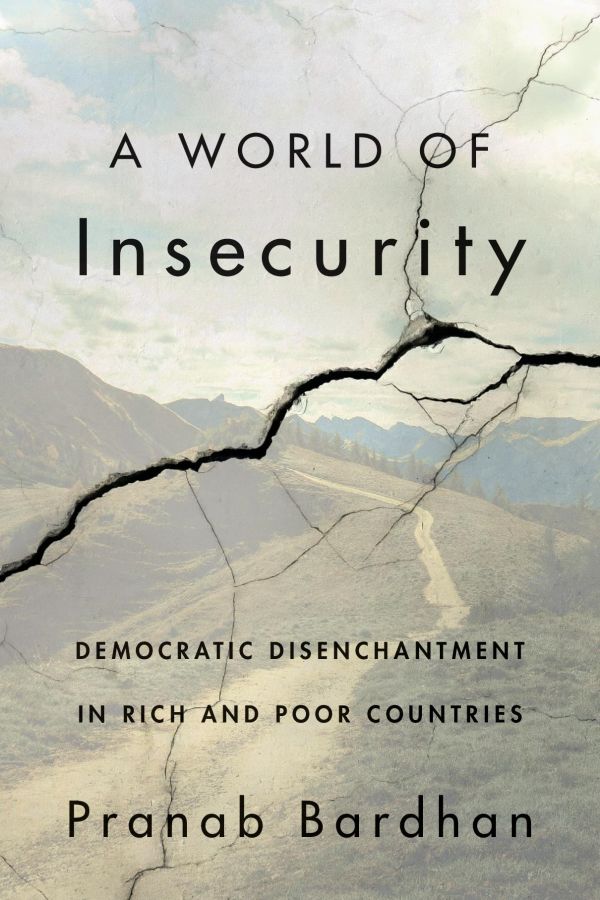
A World of Insecurity: Democratic Disenchantment in Rich and Poor Countries (HB)
An ambitious account of the corrosion of liberal democracy in rich and poor countries alike, arguing that antidemocratic sentiment reflects fear of material and cultural loss, not a critique of liberalism’s failure to deliver equality, and suggesting possible ways out. The retreat of liberal democracy in the twenty-first century has been impossible to ignore. From Wisconsin to Warsaw, Budapest to Bangalore, the public is turning against pluralism and liberal institutions and instead professing unapologetic nationalism and majoritarianism. Critics of inequality argue that this is a predictable response to failures of capitalism and liberalism, but Pranab Bardhan, a development economist, sees things differently. The problem is not inequality but insecurity―financial and cultural. Bardhan notes that antidemocratic movements have taken root globally in a wide range of demographic and socioeconomic groups. In the United States, older, less-educated, rural populations have withdrawn from democracy. But in India, the prevailing Hindu Nationalists enjoy the support of educated, aspirational urban youth. And in Europe, antidemocratic populists firmly back the welfare state (but for nonimmigrants). What is consistent among antidemocrats is fear of losing what they have. That could be money but is most often national pride and culture and the comfort of tradition. A World of Insecurity argues for context-sensitive responses. Some, like universal basic income schemes, are better suited to poor countries. Others, like worker empowerment and international coordination, have broader appeal. But improving material security won’t be enough to sustain democracy. Nor, Bardhan writes, should we be tempted by the ultimately hollow lure of China’s authoritarian model. He urges liberals to adopt at least a grudging respect for fellow citizens’ local attachments. By affirming civic forms of community pride, we might hope to temper cultural anxieties before they become pathological.
Store price
LKR 2,370.00
AuthorPranab Bardhan
ISBN
9780674292574
Brand / PublisherHarvard University Press
Weight0.380 kg
Availability1 in stock
Secure checkout
Fast delivery updates
Verified stock details
Order this item
Choose quantity, add it to cart instantly, or go straight to buy now.
Secure checkoutUse the EXPOGRAPHIC cart and checkout flow with your account.
Delivery supportShipping and order details are confirmed during checkout.
Need help?Contact the store team for product, stock, or delivery guidance.
Product details
About this item
Key information, quick facts, and store-ready details arranged in a cleaner shopping layout.
An ambitious account of the corrosion of liberal democracy in rich and poor countries alike, arguing that antidemocratic sentiment reflects fear of material and cultural loss, not a critique of liberalism’s failure to deliver equality, and suggesting possible ways out.
The retreat of liberal democracy in the twenty-first century has been impossible to ignore. From Wisconsin to Warsaw, Budapest to Bangalore, the public is turning against pluralism and liberal institutions and instead professing unapologetic nationalism and majoritarianism. Critics of inequality argue that this is a predictable response to failures of capitalism and liberalism, but Pranab Bardhan, a development economist, sees things differently. The problem is not inequality but insecurity―financial and cultural.
Bardhan notes that antidemocratic movements have taken root globally in a wide range of demographic and socioeconomic groups. In the United States, older, less-educated, rural populations have withdrawn from democracy. But in India, the prevailing Hindu Nationalists enjoy the support of educated, aspirational urban youth. And in Europe, antidemocratic populists firmly back the welfare state (but for nonimmigrants). What is consistent among antidemocrats is fear of losing what they have. That could be money but is most often national pride and culture and the comfort of tradition.
A World of Insecurity argues for context-sensitive responses. Some, like universal basic income schemes, are better suited to poor countries. Others, like worker empowerment and international coordination, have broader appeal. But improving material security won’t be enough to sustain democracy. Nor, Bardhan writes, should we be tempted by the ultimately hollow lure of China’s authoritarian model. He urges liberals to adopt at least a grudging respect for fellow citizens’ local attachments. By affirming civic forms of community pride, we might hope to temper cultural anxieties before they become pathological.
Store verifiedDisplayed with current stock and active storefront pricing.
Easy orderingAdd to cart or buy instantly using the order actions above.
Customer readyReviews and ratings can help buyers decide faster.
CategoryNon-Fiction
ISBN
9780674292574
Brand / PublisherHarvard University Press
Weight0.380 kg
Availability1 in stock
Ratings and reviews
Customer opinions
Let customers see ratings clearly and submit their feedback in a neater, more professional section.
Shopper feedback
★☆☆☆☆
Real ratings and short feedback help other shoppers decide faster.
0.0 / 5 from 0 reviews
No customer reviews yet.
Be the first customer to rate this product and share your buying experience.




8 in stock
Salvation: Black People and Love



4 in stock
Cuckooland Where the Rich Own the Truth


979 in stock
Accounting for Cambridge IGCSE and O Level

594 in stock
Yowun Katha 01 Gahakola Satha Seepawo

347 in stock
English with a Smile Book 3


54 in stock
Hero (HB)


37 in stock
English with a Smile Book 1



31 in stock
Point of Retreat : The Slammed Series #2